Music Hall 音乐组合 & 音乐家 串行
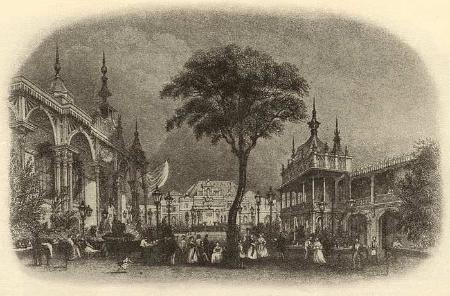
Music hall is a type of British theatrical entertainment that was most popular from the early Victorian era, beginning around 1850, through the Great War. It faded away after 1918 as the halls rebranded their entertainment as variety. Perceptions of a distinction in Britain between bold and scandalous music hall entertainment and subsequent, more respectable variety entertainment differ. Music hall involved a mixture of popular songs, comedy, speciality acts, and variety entertainment. The term is derived from a type of theatre or venue in which such entertainment took place. In North America vaudeville was in some ways analogous to British music hall, featuring rousing songs and comic acts.
Originating in saloon bars within pubs during the 1830s, music hall entertainment became increasingly popular with audiences. So much so, that during the 1850s some public houses were demolished, and specialised music hall theatres developed in their place. These theatres were designed chiefly so that people could consume food and alcohol and smoke tobacco in the auditorium while the entertainment took place, with the cheapest seats located in the gallery. This differed from the conventional type of theatre, which seats the audience in stalls with a separate bar-room. Major music halls were based around London. Early examples included: the Canterbury Music Hall in Lambeth, Wilton's Music Hall in Tower Hamlets, and The Middlesex in Drury Lane, otherwise known as the Old Mo. By the mid-19th century, the halls cried out for many new and catchy songs. As a result professional songwriters were enlisted to provide the music for a plethora of star performers, such as Marie Lloyd, Dan Leno, Little Tich, and George Leybourne. All manner of other entertainment was performed: male and female impersonators, lions comiques, mime artists and impressionists, trampoline acts, and comic pianists (such as John Orlando Parry and George Grossmith) were just a few of the many types of entertainments the audiences could expect to find over the next forty years.
The Music Hall Strike of 1907 was an important industrial conflict. It was a dispute between artists and stage hands on one hand, and theatre managers on the other. The halls had recovered by the start of the First World War and were used to stage charity events in aid of the war effort. Music hall entertainment continued after the war, but became less popular due to upcoming jazz, swing, and big-band dance music acts. Licensing restrictions had also changed, and drinking was banned from the auditorium. A new type of music hall entertainment had arrived, in the form of variety, and many music hall performers failed to make the transition. They were deemed old-fashioned, and with the closure of many halls, music hall entertainment ceased and modern-day variety began.
阅读全文...
投票规则
- 您可以投票向上或向下。请务必在投票时,如考虑到上下文一首歌应该投票或向下就包含在这张专辑中,演员的表现,与其他演员在同一部电影,一本书就由同一作者的其他书籍,或在同一流派相比其他歌曲。
- 相反的票在24小时内通过简单的点击可以取消一票。然后,您可以在同一项目再次投票。
- 在特定的列表,每24小时,每件每个用户都拥有一票。 24小时后,您可以再次投票,同一项目在同一列表。
- 你可以投票,你想尽可能多的项目在列表或同一项目,如果它是另一个列表的一部分。例如,你可以投票,大卫·鲍伊或名单上的流行音乐艺术家以及名单上的独立摇滚艺术家和摇滚音乐艺术家等列表
- 快乐的投票!